
When soil or groundwater contains volatile organic compounds — chlorinated solvents such as TCE and PCE, or petroleum hydrocarbons — or when landfill gas and methane are present beneath a site, vapors can move up into buildings through slabs, cracks and utility penetrations. SSI designs, builds and controls vapor mitigation systems that intercept those vapors below the slab, vent them safely away from occupants and prove the system is working.
Systems range from a single sub-slab depressurization (SSD) blower package to multi-building facilities where each building’s blowers, gas detection and control panel report to a central master panel.
Mitigation approaches
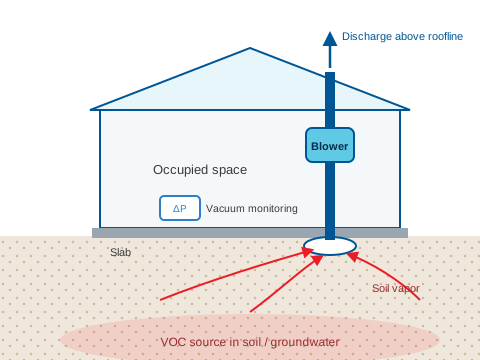
Sub-slab depressurization
Blowers pull soil gas from suction points under the slab so air flows out of the building, not in.
Sub-membrane depressurization
For crawlspaces: a sealed membrane over exposed soil, depressurized from beneath.
Passive / convertible venting
Sub-slab vent piping for new construction that can be made active by adding a blower.
Vapor treatment
Carbon or other off-gas treatment where discharge limits apply.
SSD blower packages
Built and tested in SSI’s shop, ready to set, connect and start.
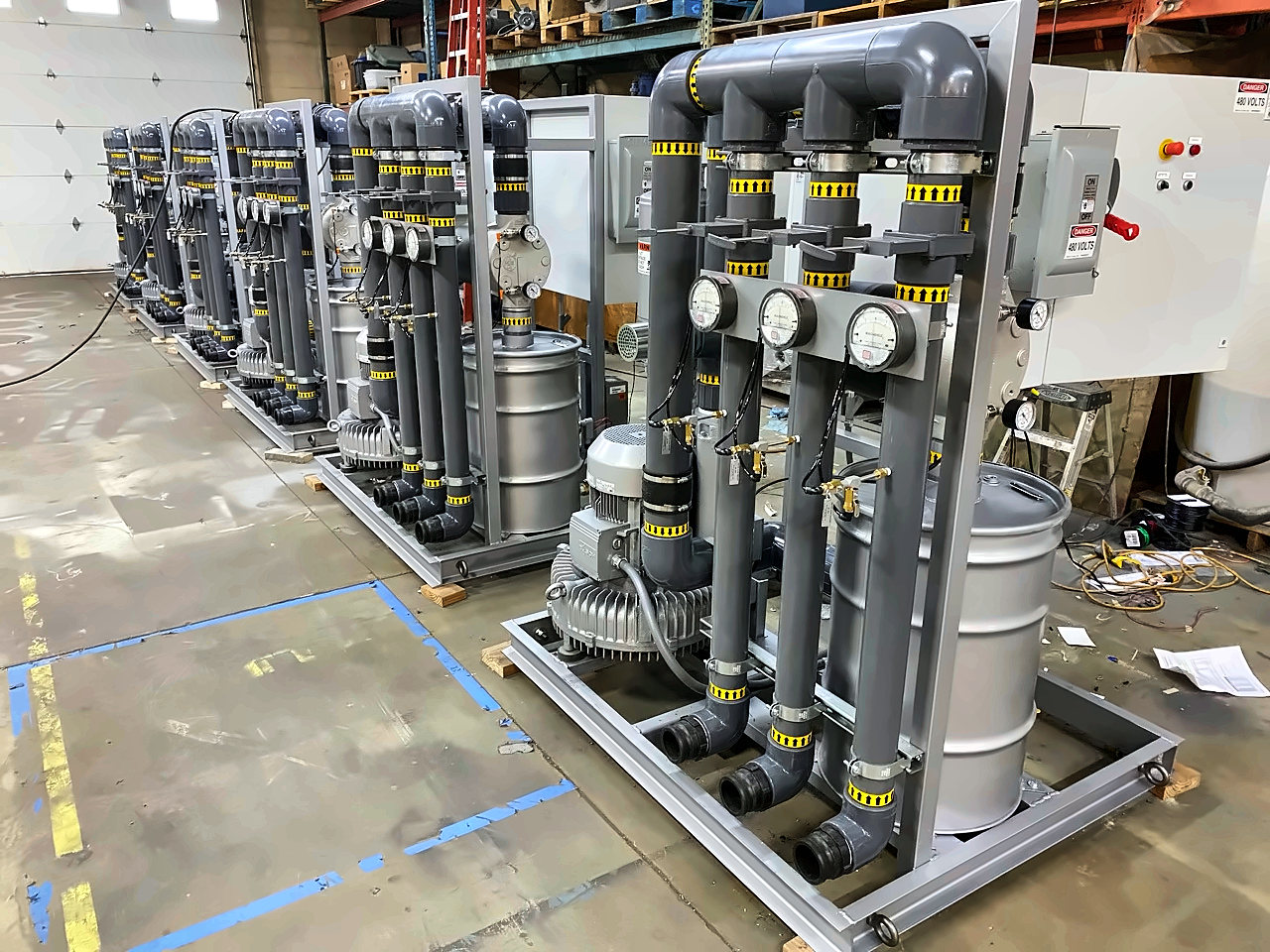
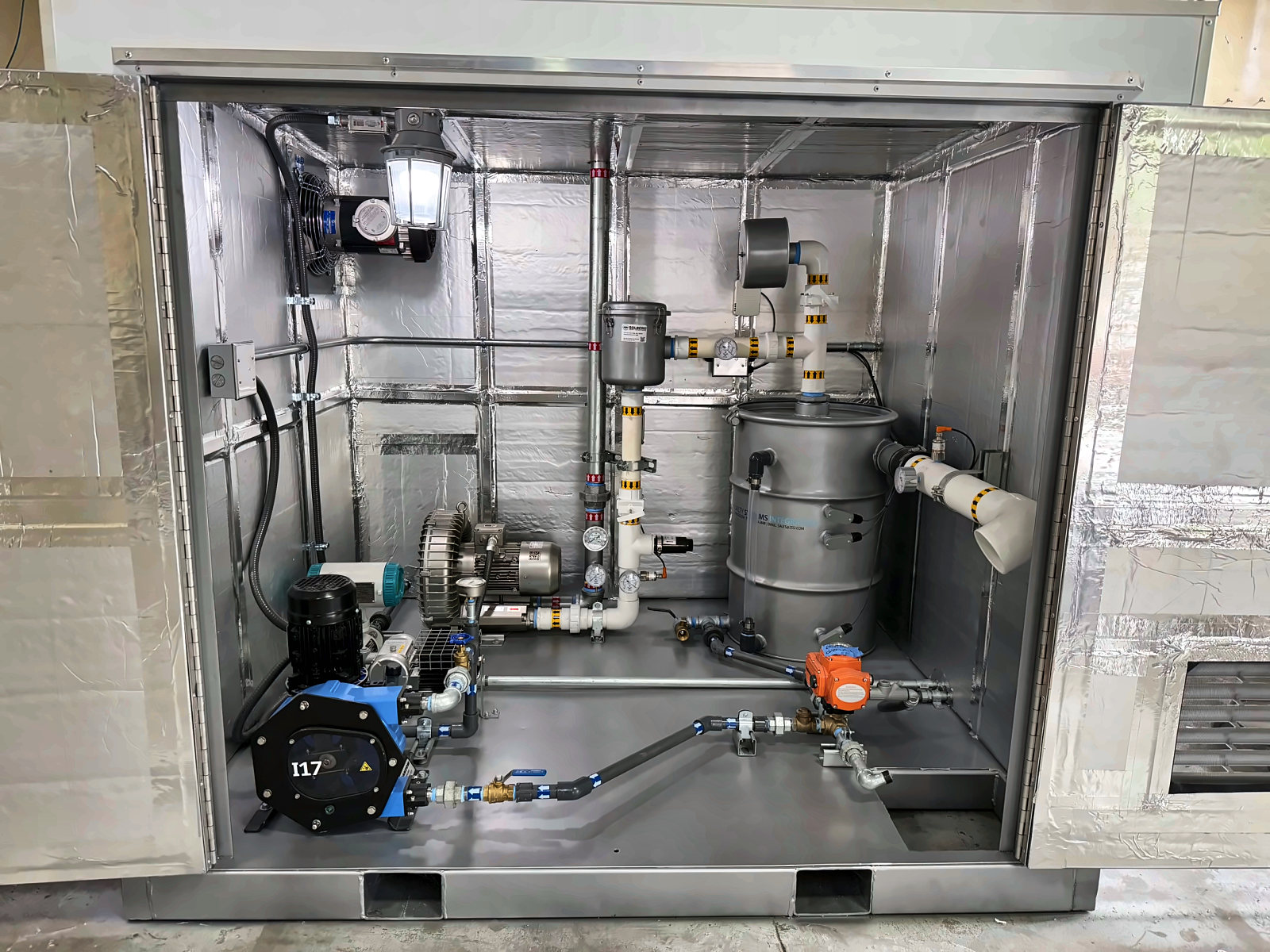
- Regenerative blowers sized to measured sub-slab flow and vacuum
- Inlet filtration and moisture separators
- Automatic condensate removal
- Recirculation loops for flow control
- Vacuum relief valves
- Vacuum transmitters, gauges and flow switches
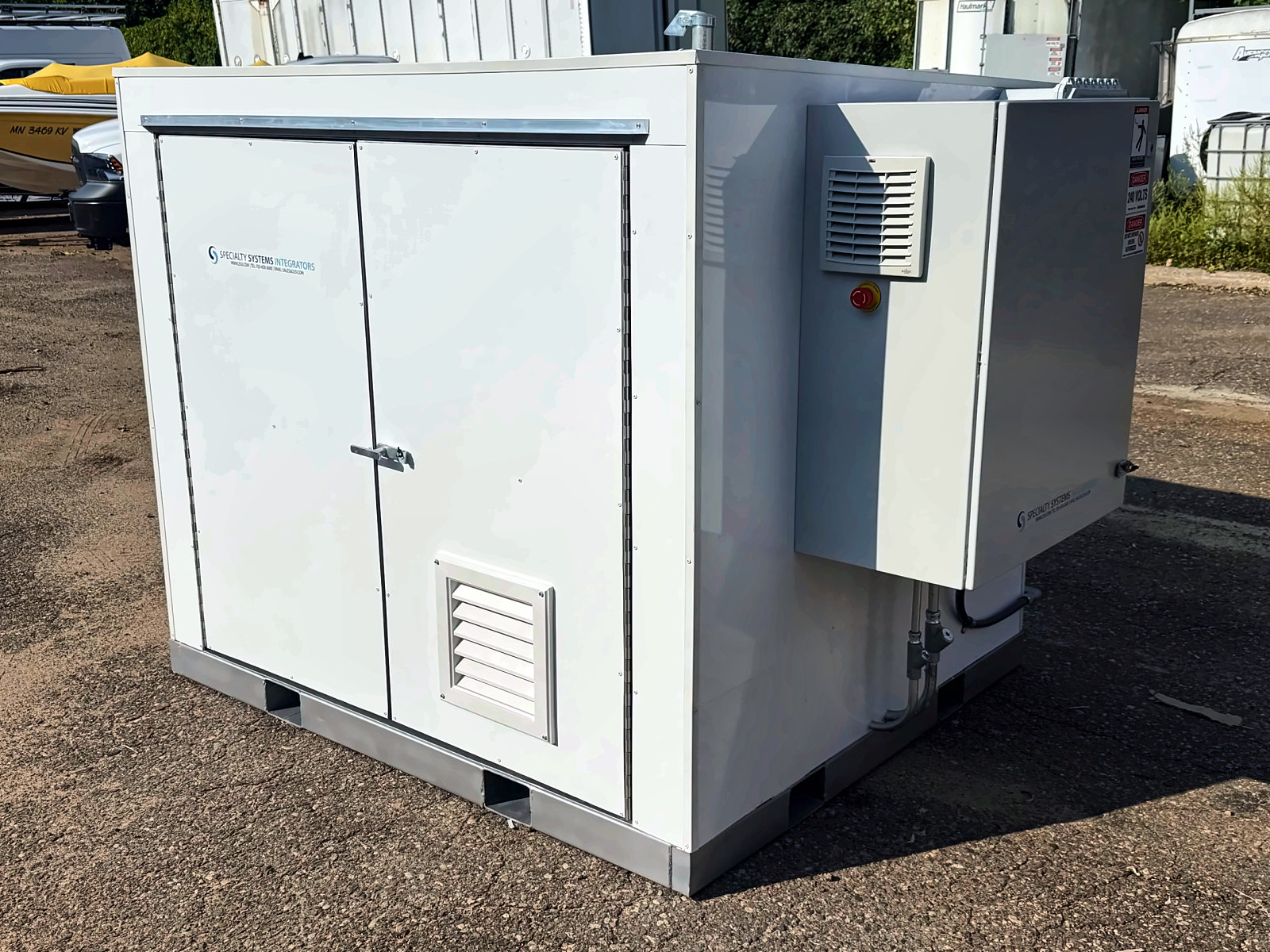
- Skid-mounted packages or fully enclosed systems
- Custom insulated aluminum enclosures with lighting and ventilation
- Weatherproof, lockable fiberglass enclosures for retrofits
Rooftop SSD systems
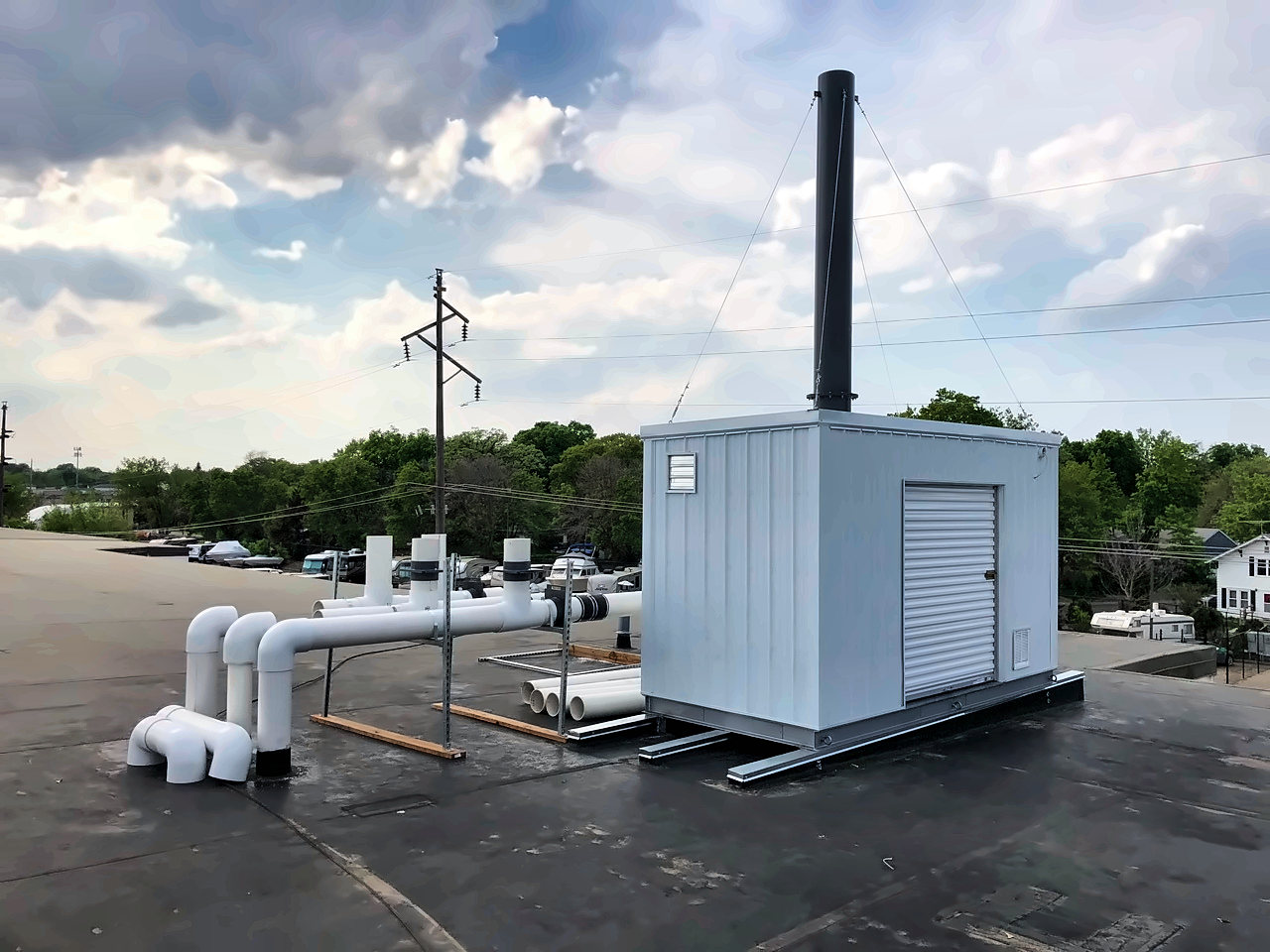
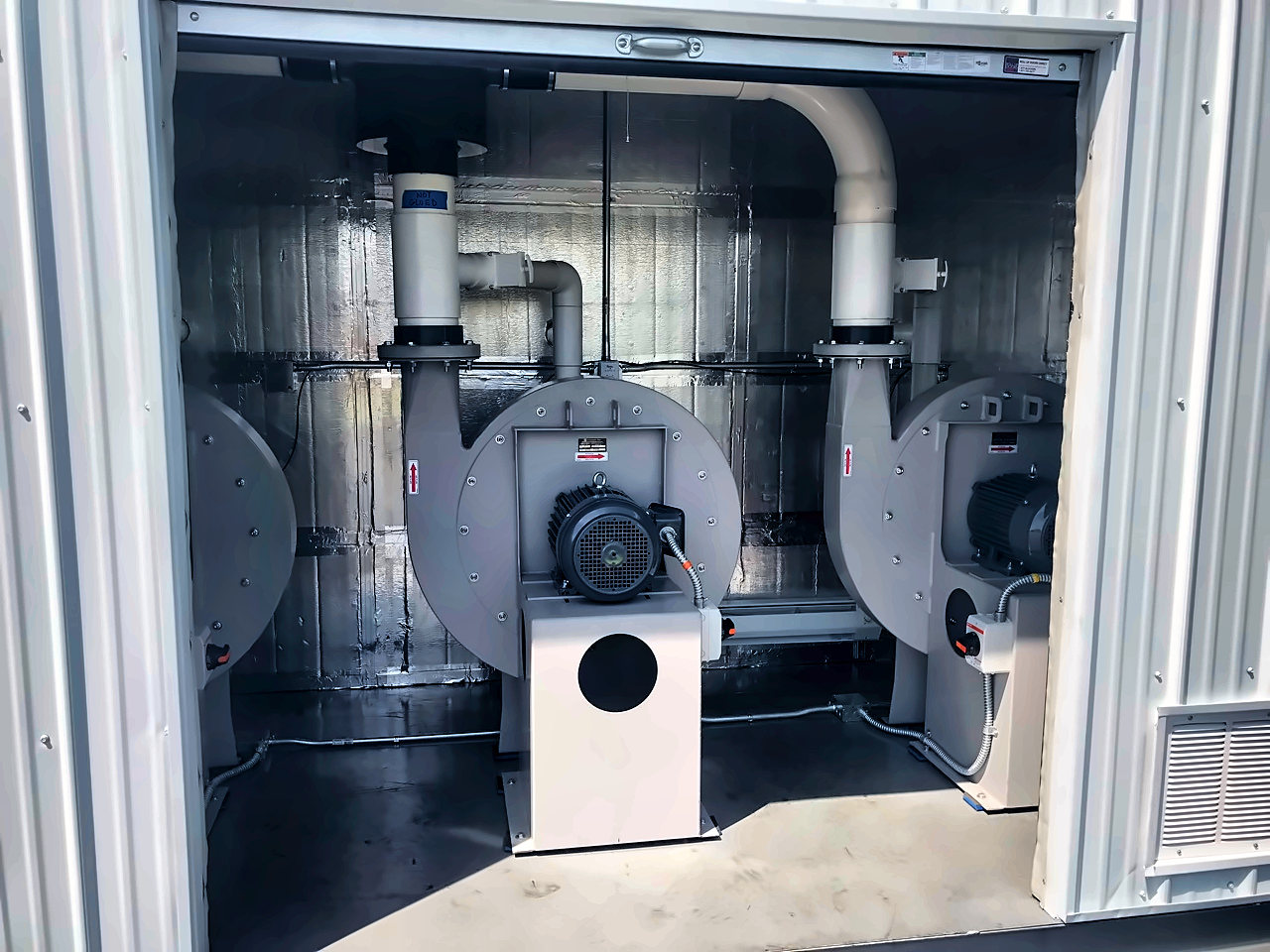
Where ground space is limited, SSI mounts the complete SSD system on the roof. An insulated, ventilated enclosure sits on structural steel supports, high-capacity centrifugal blowers draw from the sub-slab piping, and a guyed discharge stack vents vapor well above the roofline.
Gas detection and monitoring
For methane sites, SSI supplies and integrates combustible gas (LEL) monitoring for both the occupied space and the sub-slab:
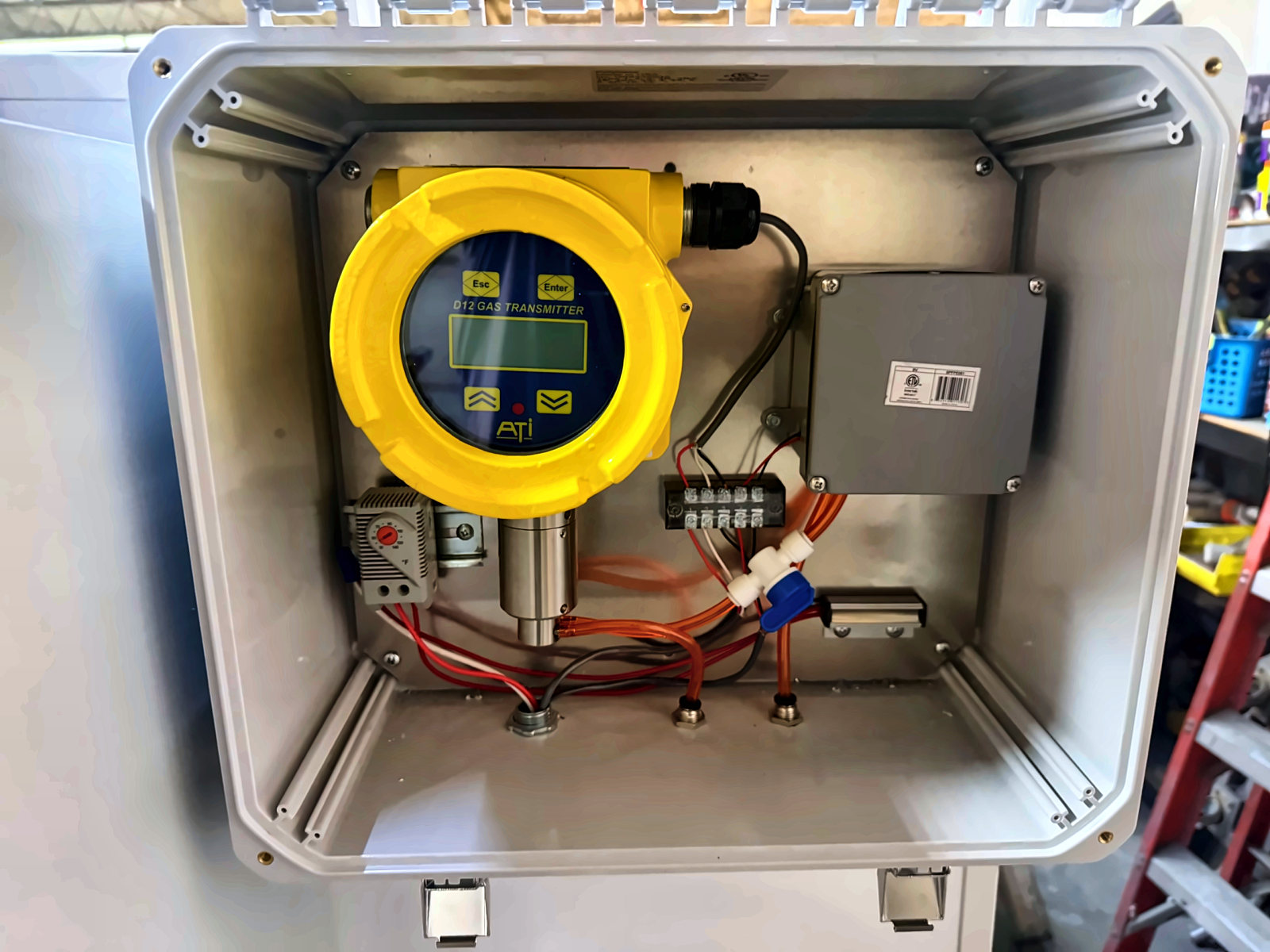
- Indoor ambient monitoring — infrared LEL sensors mounted at the ceiling, with transmitters and calibration adapters at floor level so sensors can be calibrated without lifts or ladders
- Sub-slab monitoring — stations are built and wired in SSI’s shop; a low-flow sampling pump draws sub-slab vapor through a flow cell on the sensor and returns it below the slab in a closed loop, keeping impacted air out of the building
- System verification — vacuum transmitters at each blower and air velocity sensors in the ductwork confirm the system is pulling as designed
Controls, alarms and remote access
- UL 508A PLC control panels in NEMA 4 lockable enclosures with surge protection and battery backup
- 10-inch color touchscreen with a P&ID display, hand-off-auto control, alarm history and run-hour meters
- Operator-adjustable warning and alarm levels for each sensor, with email and text notifications
- Data logging at a user-selected interval, downloadable remotely as a CSV file
- Full remote control from any PC, Mac, tablet or smartphone — no outside server and no proprietary programming software
- Radio links from each building panel to a master facility control panel on multi-building sites
- Dry contacts to signal alarms to the building’s fire alarm panel
Upgrading existing systems
SSI also upgrades systems already in the field. Existing blowers can be fitted with enclosures, instrumentation and new motor starters and brought under a single control panel. Existing gas sensors can be shipped to SSI’s shop to be mounted in enclosures and wired into the new system.
From diagnostics to long-term operation
SSI handles sub-slab communication and pilot testing, design, in-house fabrication and start-up — an SSI field engineer checks the installation, calibrates instruments, starts the system and trains operators — followed by remote monitoring and O&M support.